

Plotter
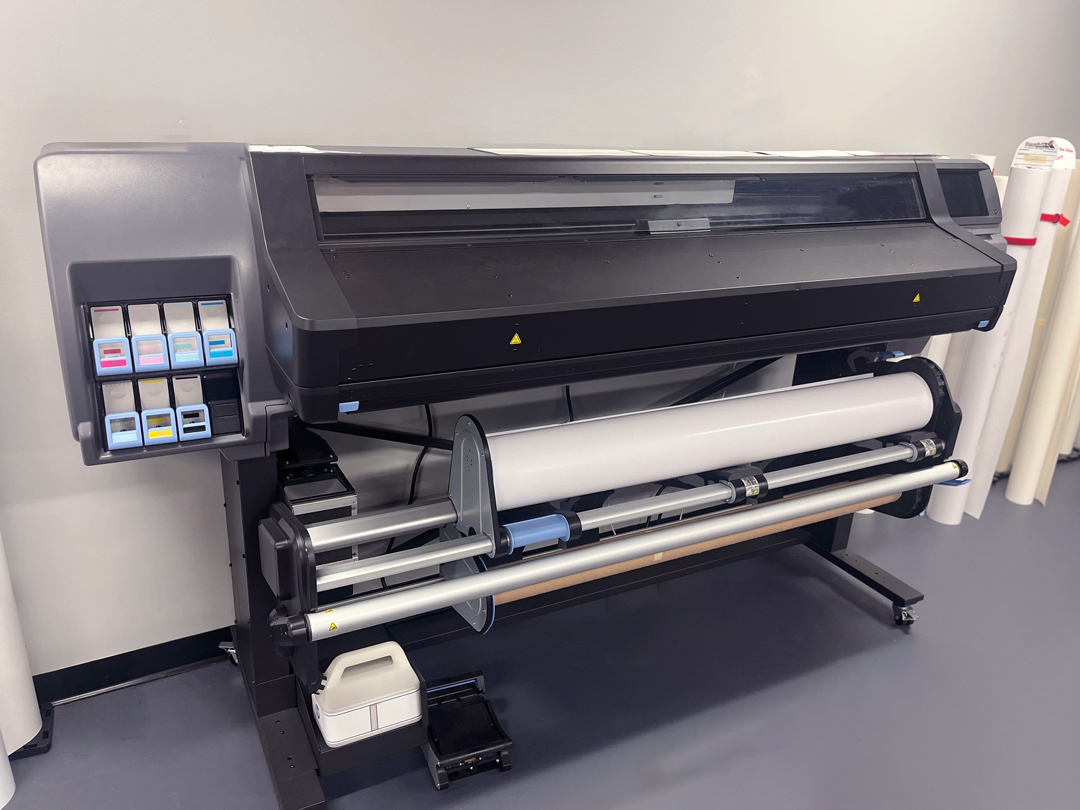

What is a Plotter?
Also sometimes called a CAD (computer-aided design), GIS (geographic information system) large format and a technical printer, plotter printers have some advantages and disadvantages over format printers. Both types of printers are key output devices but are different in some ways. Plotter printers control an automated pencil, marker, or pen via digital instruction to physically draw lines on a printing medium, whether that’s paper or something else.
A prime difference between format and plotter printers lies in the file format output by each. Format printers generate raster (bitmap, pixel) images while plotters create vector images. Vector art is programmatically created using mathematical formulae in computer code which builds curves and lines dynamically between points, or nodes, specified in a digital art file by a designer.
Plotters are generally large printers used to output these vector graphics. These graphics are essentially continuous line art, while traditional printers cannot generate. Instead, traditional format printers make those lines out of separate dots. Because of this, plotters are actually capable of making bigger graphics.
Despite this advantage, plotters are used much less in current times because conventional large and wide-format printers are able to produce at the size, speed and scale most modern marketers desire. Plotters still retain a niche, however, mostly among the aforementioned cartographical and architectural crowd.
What do you print with a plotter?
A plotter printer creates very crisp and sharp images for your project due to its mechanical configuration and the file format used. Because of this, plotters are perfect for your:
- Architectural drawings
- Blueprints
- Mechanical drawings
- Circuit drawings
- Maps & charts
Cutting Plotters
Though plotter ink printing is less-used now, there is a newer application for plotter printing technology that has created its very own niche. This is the cutting plotter. Cutting plotters are ingenious devices that replace the automated line drawing implement with a sharp cutting blade. The applications for this are many-fold, chief among them being the cutting of thin media such as vinyl. Marketers love using cutting plotters because they have opened up numerous eye-catching graphical possibilities for varied-shape advertisements on vehicles, signage, indoor ads and more.
Cutting plotters have greatly multiplied the options for creativity when it comes to large format printing projects. Not only does a designer have the actual “blank canvas” of the printing medium on which to display colorful, attention-grabbing images; now they can also create large-format projects which can take advantage of the medium’s physical shape within a space. Imagine the impactful difference between a simple movie poster versus a life-size standee cut to fit the imagery of movie characters.
Plotter Applications
While plotter printers currently are most often used for CAD, GIS and CAE (Computer-aided engineering) purposes, plotters still print with greater precision than traditional large-format printers.
Wide-format plotters generally offer a series of common widths when it comes to the size of media that can be printed on. Some of the most common are 11, 18, 24, 30, 36 and 42 inches, though there are other choices within that range. Having a set of standard dimensions helps reduce cost for large-scale customers of plotter printer projects.

